
Watch 100 humanoid robots learn in public
No demo magic tricks here

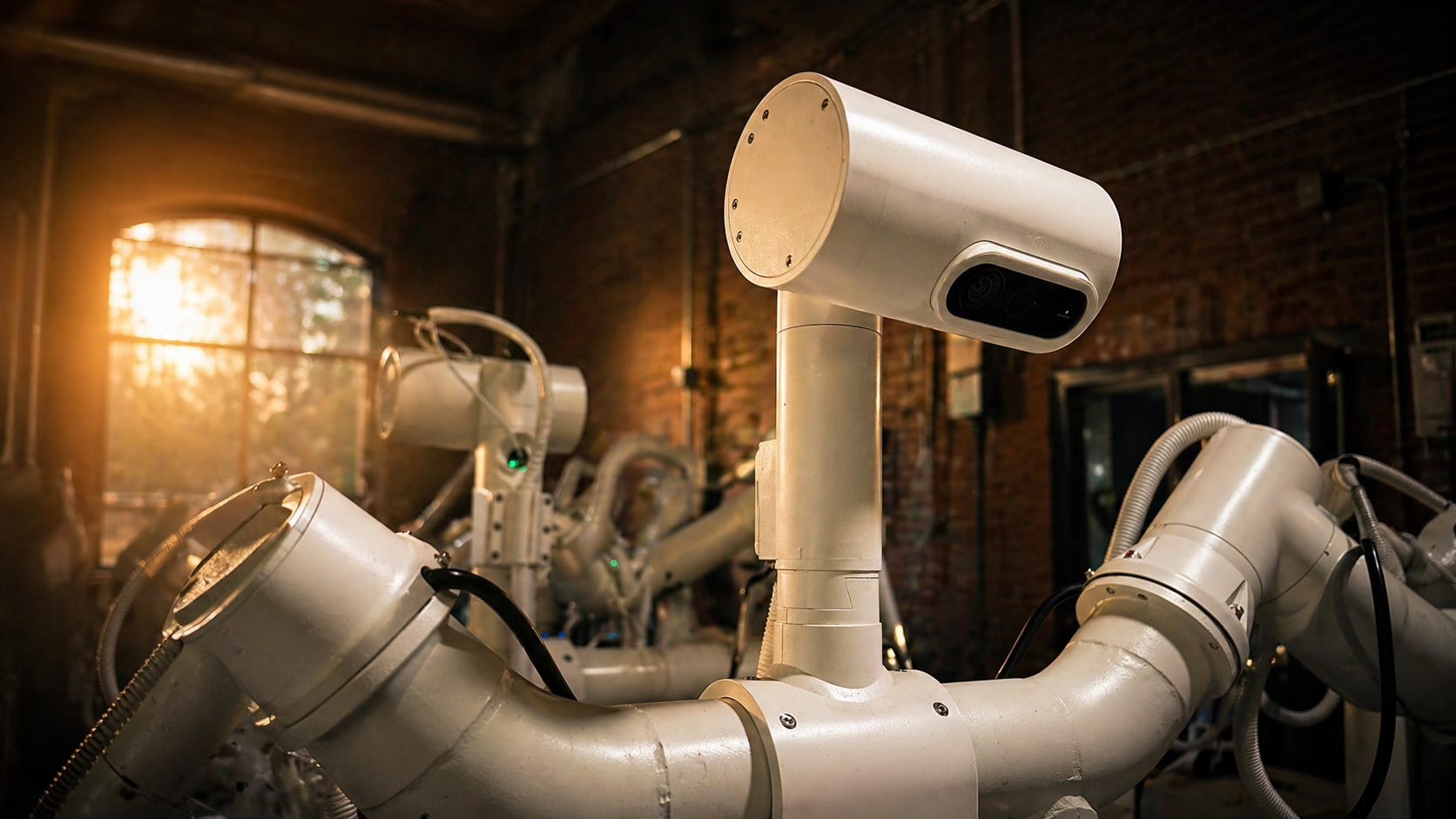
I’m standing in a 300-year old warehouse in Boston where the sailcloth for the USS Constitution (yeah, that Constitution) was made. I’m with about a hundred humanoid robots.
Most of them are failing miserably at their jobs.
They’re called Sonny. None of them have been here longer than two months. Some arrived a few days ago. They’re picking, packing, sorting, or trying to. Some grasps land. Some don’t. A gripper closes on air, an arm reaches for something that isn’t quite where it thought it was.
Every attempt, success or failure, is data. In that sense, every attempt — fail or succeed — is success.
That’s the whole point. And it’s also the most interesting thing about my visit.
Check it out here:
Robotics has a demo problem
If you’ve watched humanoid robot videos for any length of time, you know the drill: a single robot, in a controlled space, executing one carefully choreographed task. Cut, post, viral.
The success criteria is one good video.
Tutor Intelligence just did something different. They invited me and a few other journalists in early — like, visibly early — to watch robots that are still very much learning. Baby-stage learning.
I asked Josh Gruenstein, one of the founders, why they’d show this stage publicly.
His answer flipped the question: why wouldn’t you?
This episode of TechFirst is sponsored by Apprentice
Did you think AI was only for digital work? Nope … AI-native manufacturing is here. This month’s sponsor is Apprentice, which offers the first AI Agent built from the ground up for agentic manufacturing. Connects to all your systems, monitors everything, automates all your processes … but keeps a human in the loop. Check it out at apprentice.io.
“In the robotics community, there’s been a very demo-oriented approach,” he told me. “The success criteria is we want to show the robot doing the thing once, get a video, and post that video. That’s a culture we’re going to have to move away from as robotics — and specifically deep learning for robots — moves away from something that exists only in the lab to something that exists in the field.”
That’s a real shift. And it matters, because deep learning for robots only works if you’re willing to be wrong a lot, even if it’s in front of people, on the way to being right.
How Sonny actually learns
The training loop looks like this: initial task demonstration, then rollouts, then human supervision and reward feedback: RLHF, but for physical actions instead of text. The robot tries. A human marks what worked and what didn’t. Repeat.
The result is better knowledge on tap: better control, better world-understanding, better action.
Right now the hardware is deliberately minimal. Six degrees of freedom per arm — the mathematical minimum to reach any position in 3D space. Two arms, because most useful tasks need two hands and it gives you fault tolerance and throughput. Four cameras, including ones on the hands themselves, because humans fish around in dark spaces using touch and intuition, and robots have to compensate with vision they can actually point.
The grippers right now are FINRAY-style: bio-inspired, compliant, 3D-printed, and about as simple as you can get away with. Gruenstein said more complex hands are coming, but only when the current ones are saturated. In other words, when the robots’ learning capability with these basic grippers is filled up.
Spoiler alert: they aren’t yet.
It’s an unusually disciplined approach in a space that loves to over-engineer the demo.
Beyond Boston
Almost everything you buy comes in a box. You probably assume some robot packed that box, but the reality is that today, almost none of it is automated. It’s hands — human hands — at scale.
But … like many of the western economies, the U.S. has a labor shortage in exactly this kind of work. (Frankly, so does China today.) And there’s national interest in re-shoring more manufacturing and distribution.
The idea is that robots can remove the bottleneck.
But first they have to learn a lot of stuff.
Tutor’s bet is that the path to solving that doesn’t run through one perfect demo robot. It runs through a hundred imperfect ones, learning from each other’s mistakes, in a room you’re allowed to walk into.
The robot packing boxes next to me is probably getting a C-minus right now. He’s not defensive about it. “You’ve got to start somewhere.”
That’s one of the most honest sentences I’ve heard in humanoid robotics this year. And given that Tutor already has other non-humanoid robots in-market doing high-volume, profitable work, it’s a good sign that this company has its (robotic?) head screwed on right when it comes to humanoids too.